Repair Service Postcard Template: A Practical Guide to Professional Marketing
In the competitive landscape of home services, visibility is everything. Whether you run a plumbing, HVAC, or general handyman business, your ability to communicate reliability and expertise can make or break a customer’s decision. This is where a Repair Service Postcard Template becomes an invaluable asset. It offers a straightforward, cost-effective way to stay top-of-mind with potential clients who may need your services in the future. However, simply downloading a design file is not enough. To truly leverage this tool, you must understand its technical specifications, customization limits, and the common pitfalls that lead to poor print quality or wasted budget.
Many small business owners and freelancers assume that any digital template will translate seamlessly into a physical marketing piece. This assumption often leads to frustration when the final printed result looks blurry, has cut-off text, or features incorrect colors. By understanding the specific features of a high-quality Repair Service Postcard Template, you can avoid these costly errors and create materials that effectively drive business growth.
Understanding What You Are Actually Buying
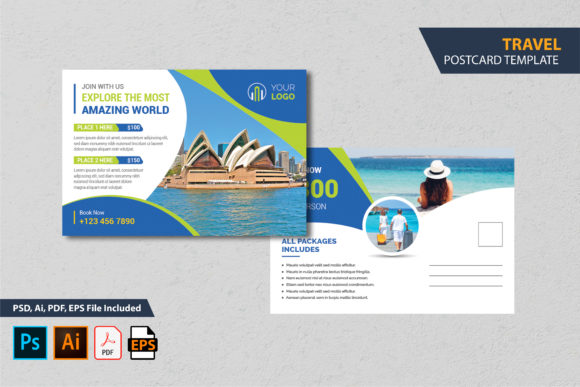
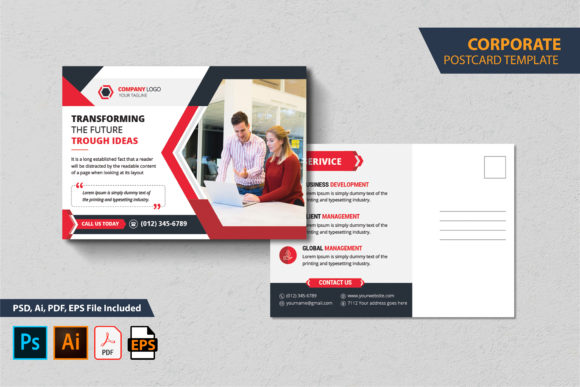
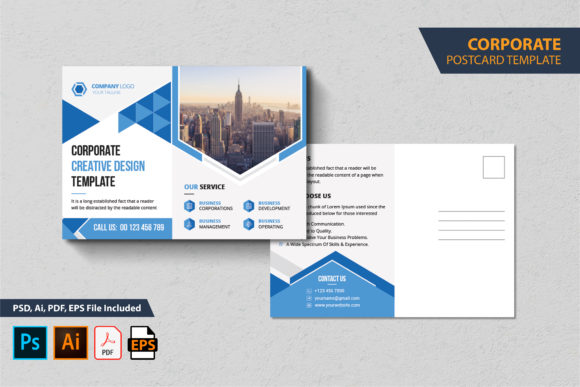
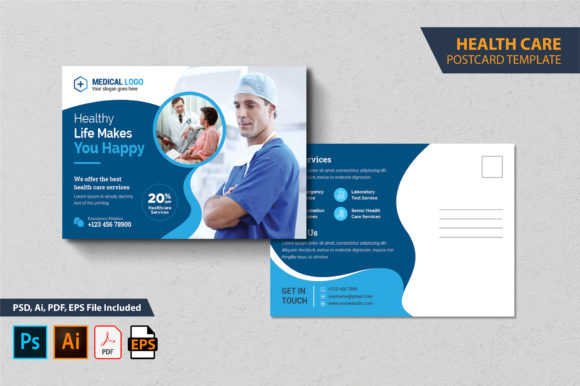
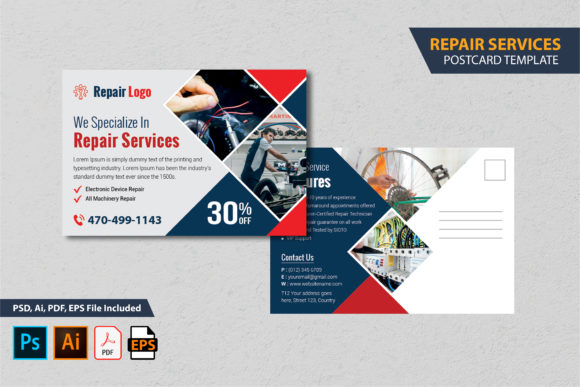
One of the most significant misunderstandings among buyers is the difference between a template and a mock-up. When browsing online marketplaces, it is easy to be drawn in by images showing beautifully designed postcards sitting on a wooden table or being held by a model. These are mock-ups used for preview purposes only. The actual product you receive is a digital file intended for editing and printing, not a photograph of a finished product.
A standard Repair Service Postcard Template typically includes editable source files such as PSD (Photoshop), AI (Illustrator), EPS, and PDF formats. This variety ensures compatibility with various design software versions, including Adobe Illustrator or Photoshop CS through CC 2020. While this flexibility is excellent for professionals, beginners should note that "editable" does not mean "plug-and-play." You still need a basic understanding of how to manipulate layers, change text boxes, and swap out images within your chosen software.
The Importance of Technical Specifications
Before you begin customizing your Repair Service Postcard Template, you must pay close attention to the technical parameters provided in the download package. Ignoring these details is the primary reason for rejected prints at local shops or expensive reprints from online vendors.
- Dimensions and Bleed: A standard postcard size is 6x4 inches. However, professional printing requires a 0.25-inch bleed on all sides. This extra space ensures that when the card is trimmed, there are no unintended white edges. If your background color or image extends only to the 6x4 line without the bleed, your cards will look amateurish.
- Color Mode: Digital screens use RGB (Red, Green, Blue) color, while printers use CMYK (Cyan, Magenta, Yellow, Key/Black). A high-quality template will be delivered in CMYK mode. If you edit the file in RGB mode and then try to convert it later, colors may shift dramatically, making vibrant blues look dull or muddy.
- Resolution: Ensure the template is set to 300 DPI (Dots Per Inch). Lower resolutions will result in pixelated text and blurry logos when printed, damaging your brand’s perceived professionalism.
Common Mistakes to Avoid During Customization
Even with a well-structured Repair Service Postcard Template, user error can compromise the final output. Here are practical warnings to help you maintain quality and clarity.
Ignoring the Font License and Links
Templates often rely on specific fonts to achieve their intended aesthetic. The download usually includes a "Read Me" file that provides links to free fonts used in the design. A critical mistake is replacing these fonts with default system fonts that look different or are not installed on your computer. This can cause layout shifts, overlapping text, or missing characters.
Furthermore, always verify if the fonts are free for commercial use. Some templates include premium fonts that require a separate license. Using unlicensed fonts can lead to legal issues, especially if your postcards are distributed widely. Stick to the included free fonts unless you have verified the licensing terms of any replacements.
Overcrowding the Design
Postcards are concise marketing tools. A common error is trying to fit too much information onto a 6x4 inch surface. When using a Repair Service Postcard Template, it is tempting to list every service you offer, multiple phone numbers, and a long company history. This clutter confuses the reader and dilutes your message.
Instead, focus on a single clear call to action. For example, "Need Emergency Plumbing? Call Now!" followed by one primary phone number and a QR code linking to your booking page. Use the layered structure of the template to group related elements logically. Keep margins safe; ensure critical text and logos are not too close to the edge, especially considering the 0.25-inch trim requirement.
Neglecting Image Quality
The template comes with placeholder images, but these are for demonstration only. When swapping in your own photos, ensure they are high-resolution and relevant. Blurry photos of a repair job or generic stock images that do not match your brand voice can undermine trust. Since the template is fully layered and editable, take the time to crop and adjust your images to fit the designated frames properly. Do not stretch low-resolution images to fill large spaces, as this will degrade print quality significantly.
Maximizing Efficiency and Usability
To get the most out of your Repair Service Postcard Template, adopt a systematic approach to customization. Start by opening the "Read Me" file immediately upon download. This guide is your roadmap, providing specific instructions on how to access layers, change colors, and export files correctly.
If you are not a design expert, consider hiring a freelance graphic designer to handle the initial setup. Provide them with your logo, contact details, and preferred color scheme. Once the base design is finalized, you can save the file and reuse it for future campaigns, simply updating dates or promotional offers. This saves time and ensures consistency across all your marketing materials.
Additionally, always proofread your text twice before exporting. Typos in phone numbers or addresses are catastrophic for response rates. Print a test copy at home or order a single proof from your printer to check for color accuracy and alignment before committing to a bulk run.
Conclusion
A Repair Service Postcard Template is more than just a pretty design; it is a functional tool for business communication. By respecting the technical requirements like bleed, CMYK mode, and 300 DPI resolution, and by avoiding common pitfalls like font mismanagement and content overcrowding, you can produce professional-grade marketing materials. Take the time to understand the "Read Me" guidelines, choose high-quality assets, and keep your message clear. Doing so will enhance your brand’s credibility and help you attract more customers efficiently.